The app remains, but its context disappears easily
As a project progresses, people naturally change. The original planner leaves, developers are replaced, designers or external vendors join later.
But the app itself remains.
This is where problems begin.
New contributors encounter the app for the first time. There are many features and complex screens, but it’s hard to see at a glance how the app was built, what flow it follows, or what the product truly prioritizes.
Without someone explaining it side by side, the app becomes difficult to understand.
Shift in Thinking: The essence of handover is not explanation, but shared understanding
Many teams approach handover as a problem of explanation. They schedule meetings, walk through screens one by one, and verbally deliver context.
But this approach has clear limits. Each person explains with different emphasis, and each listener understands differently.
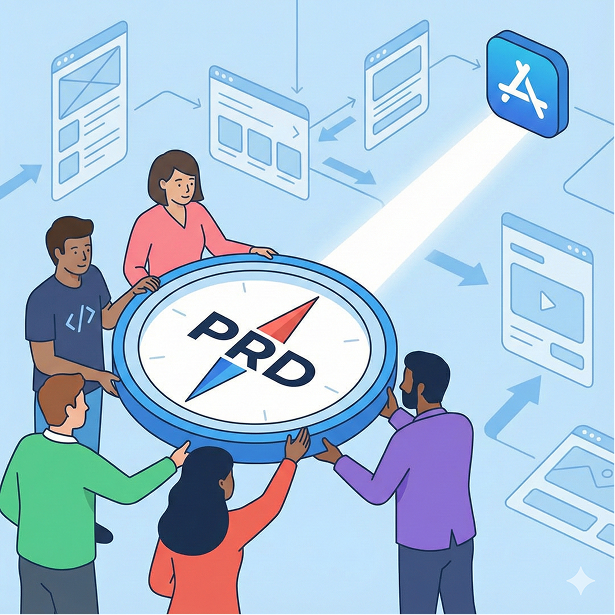
What truly matters is not who explains, but whether everyone is looking at the same picture.
That requires a document that summarizes the entire app in a single view.
Decision Criteria: What should the PRD make immediately understandable?
A PRD is not just a list of features.
When someone opens the PRD, the following should be clear at once:
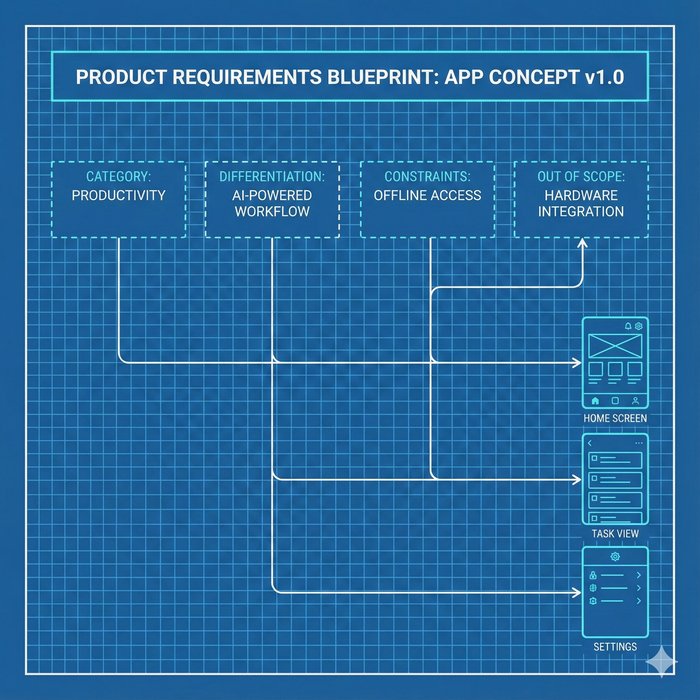
- What problem this app was built to solve
- Who the primary users are and how they move through the app
- Which features are core and which are supporting
- Which decisions are already agreed upon and which areas are still flexible
- Why this structure and flow were chosen
When this information is organized, a new contributor can quickly grasp the full context.
The PRD functions both as a concise summary of the app and as a manual for someone seeing it for the first time.
Comparison: Handover without a PRD vs. handover with a PRD as the standard
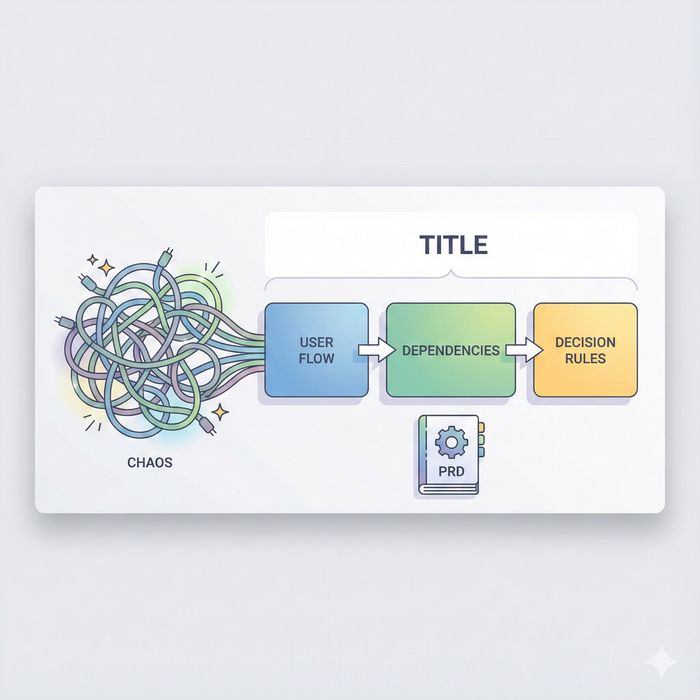
Without a PRD, understanding varies by person. Some contributors interpret the app through features, others through screens.
As a result, even while working on the same app, teams begin moving in different directions.
When a PRD exists as the standard, the situation changes.
If contributors read the PRD before starting work, they begin from the same point. “This app exists for this purpose.” “This flow is the core.”
With this shared understanding in place, discussions around implementation or design stay aligned and rarely drift off course.
Conclusion: The PRD is a shared standard document that aligns direction
A PRD is not a document for a specific person. It is a document designed for situations where people change.
It is a summary of the entire app, a manual that explains its structure and flow, and a standard that ensures everyone understands the app in the same direction.
No matter who works on it, or when it is revisited, the PRD should make it possible to understand what the app is aiming for in the same way.
That is why a PRD is not just a planning artifact, but a core document that preserves the app’s direction over time.
Summary
In projects, people changing is natural—but understanding and direction must not change with them.
A PRD summarizes the entire app, serves as a manual for newcomers, and provides a shared standard that keeps all contributors aligned. With this document in place, the app is maintained not by individuals, but as a system.