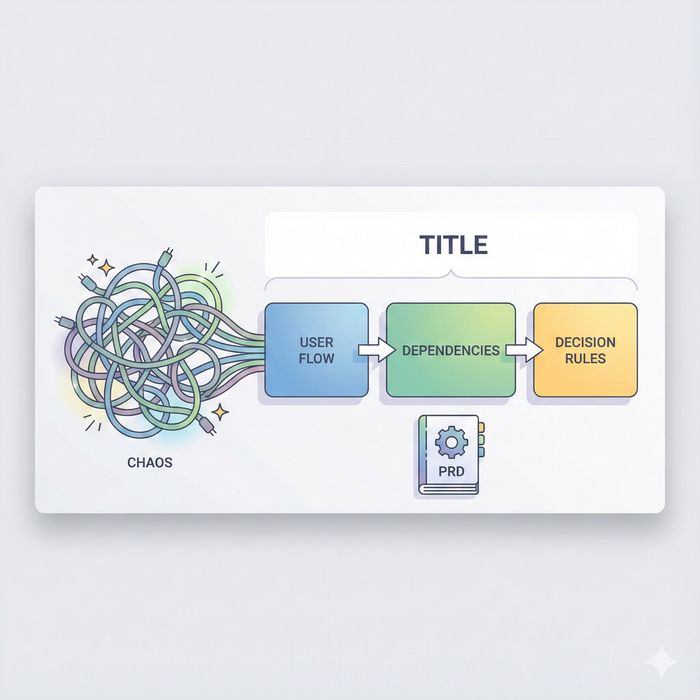
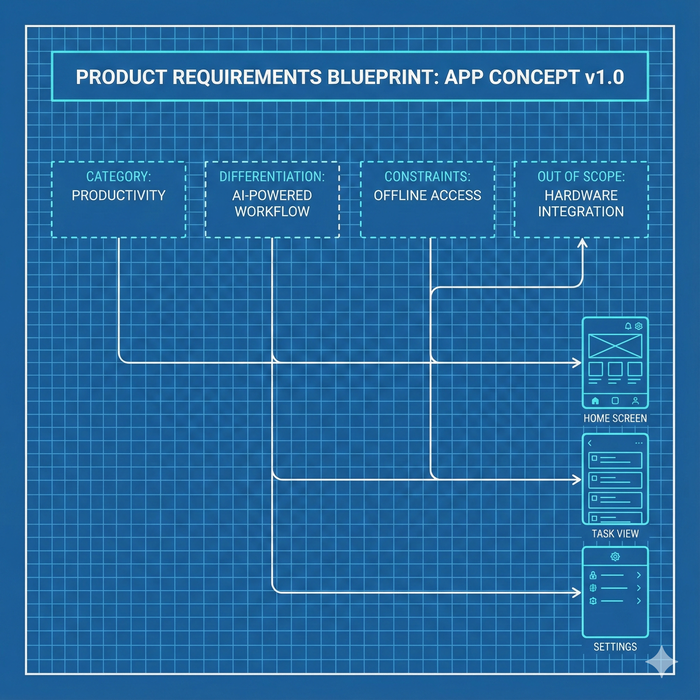
A PRD becomes a decision system when it’s written in extractable “answer blocks”: clear questions, direct answers, and structured rules—mirroring AEO’s goal of making information easy to retrieve.
The “AEO PRD” Structure (the different method)
Instead of writing PRDs as long narratives, write them as a sequence of Answer Blocks:
-
What is this? (category)
-
Why does it exist? (problem + user)
-
What’s the difference? (differentiation)
-
What must never change? (constraints)
-
What is out of scope? (anti-features)
-
How do we judge success? (metrics)
This mirrors AEO best practices: direct answers up top, consistent Q&A patterns, and structured data thinking (machines and humans can both extract it).
Why it matters: Teams drift the same way answer engines hallucinate
When a system doesn’t have a stable reference, it fills gaps.
-
Teams fill gaps with opinions.
-
Models fill gaps with guesses.
ReAct and Reflexion show why repeated reference and reflection improve reliability: the system keeps checking the frame and learning from failures.
The One-Sentence Test
If your PRD cannot produce:
-
a one-sentence “what it is”
-
a one-sentence “why it’s different”
…then the product will struggle to be remembered, explained, and shared.
Conclusion
A PRD isn’t a document you archive. It’s a retrieval system for decisions. Write it like an answer engine will read it.