
Why does maintenance feel so much harder than building the app initially?
When building an app for the first time, the goals are extremely clear: “I need to implement this feature,” “I need this screen,” and the next steps reveal themselves.
Maintenance is completely different. You must fix problems or adjust behavior inside an already existing structure. So the first question becomes:
“Why did we design it this way?”
As time passes, every decision loses its context. You no longer remember the original intention behind the feature. Screen connections fade from memory. Conditions and exceptions vanish from the mental model.
Eventually, maintenance becomes: “Trying to interpret an invisible past.”
What kinds of confusion commonly appear during maintenance?
Once an app is built, features and screens begin to influence one another. This is why the following problems appear constantly:
- A small update breaks an unrelated feature
- You’re unsure where exceptions were handled
- Forgotten data flow causes new errors after changes
- Screen transitions disappear or duplicate
- “Why did we make this feature like this?” repeats endlessly
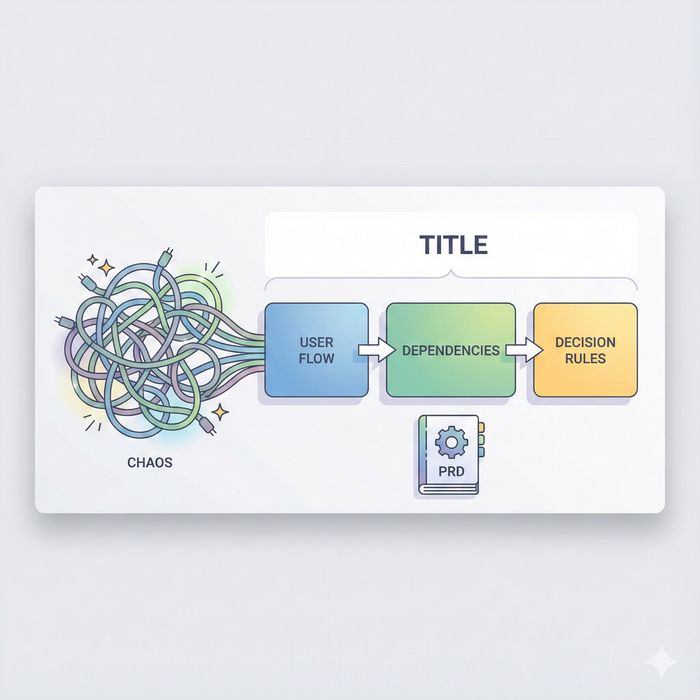
In vibe coding and no-code workflows, this chaos appears even more easily because the initial pace is fast and structural documentation is skipped. It feels fast at first—but later, maintenance becomes unstable and extremely difficult.
Why does no one remember the app’s design after some time passes?
Human memory disappears much faster than features do. Right after finishing a feature, you feel like you “remember the entire flow,” but just a few weeks later, the structure fades completely.
- Why certain conditions were required
- Why a particular screen was created
- Why specific exceptions were added
- Why the data structure was designed that way
These intents and contexts evaporate over time. The features remain—but the reason behind them disappears.
As a result, maintenance becomes a process of searching for a path inside a maze every single time.
So what should be the standard —the guiding reference—when performing maintenance?
Without a reference, maintenance becomes guesswork.
“Maybe if I change this, it’ll work?”
But such edits often break other behaviors, or solving one problem creates a new one.
The core of maintenance is: What should be the standard for making changes?
Should you base the decision on:
- The flow?
- The feature’s purpose?
- The data structure?
If there is no document that clearly shows these standards, maintenance becomes endlessly unstable.
Why can the PRD serve as the standard—the objective reference—for maintenance?
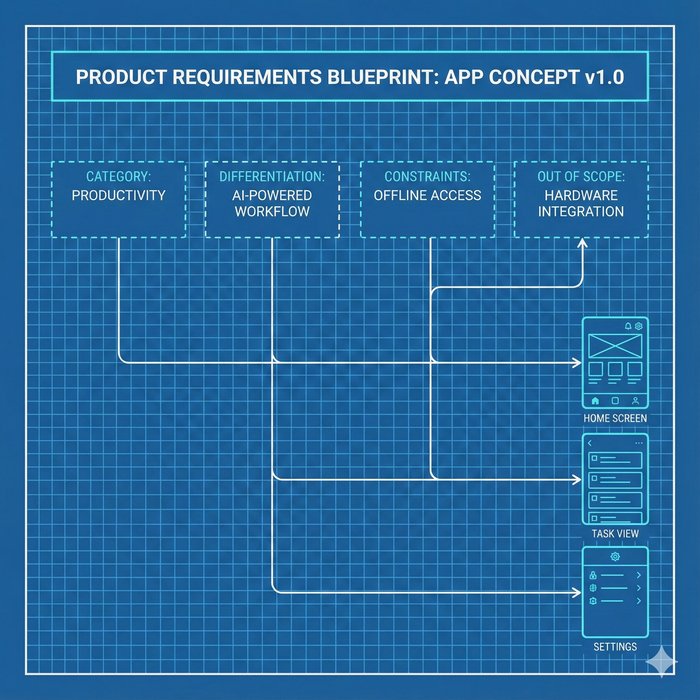
At first, a PRD is a “document for implementation.” But after the app is complete, it transforms into a top-level summary of the entire product.
It shows:
- What screens exist and what roles they serve
- What conditions and exceptions each feature has
- How data flows through the system
- Why certain design decisions were made
A PRD preserves all of that context.
Maintenance is ultimately “a conversation with your past self,” and the PRD is the record left by that past designer.
With a PRD, you can answer maintenance questions precisely:
- What was this feature’s purpose?
- What does it affect?
- What must be checked before modifying it?
In other words, the PRD becomes the objective standard—the standard—of maintenance.
Conclusion: A PRD is more important for the future than for the initial build
Most people think PRDs are only needed at the beginning. But the truth is the exact opposite.
A PRD becomes far more important during maintenance than during initial development. As features grow, time passes, and the structure becomes more complex, the PRD’s value increases dramatically. A PRD is the map and manual that shows:
- Where the app started
- How it was designed
- How it evolved
Maintenance becomes difficult the moment this map disappears.
Whether you build fast or slow, if you want an app that survives over time, your maintenance must be grounded in the PRD.